Smart_Giving
Give Smarter. Give Greater Impact.
Because you care about using resources wisely, we offer several smart, tax‑savvy ways to give that are often better than writing a check or using a credit card. These strategies can help you:
- Potentially reduce your taxes
- Make a larger impact at little or no additional cost to you
- Align your giving with your long‑term financial plans
Why Non-Cash Contributions Matter for GiveNKind
Non‑cash gifts like stock, QCDs, and DAF grants give us:
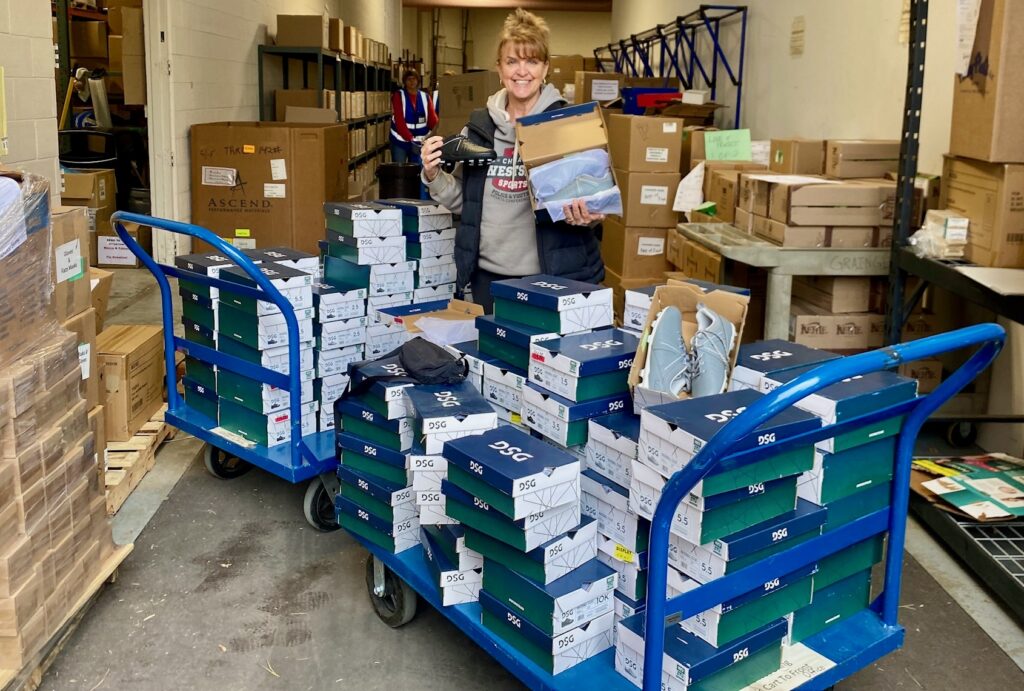
- Stability: They help provide flexible funding that supports our operations and systems that move donated goods where they are needed most.
- Scalability: With strong financial support, we can serve more nonprofits, build new partnerships with businesses, and move more product to where it can do the most good.
- Sustainability: Thoughtful, tax‑wise gifts often allow donors to give more, and give more consistently over time.
Consider whether one of these strategies could be a good fit for you and for your support of GiveNKind.
If you would like sample instructions for making a stock gift, IRA QCD, or donor-advised fund grant recommendation to GiveNKind, we are happy to help.
You or your advisor can contact us at:
GiveNKind
Website: www.givenkind.org
Email: emily@givenkind.org
Phone: 847.802.8977 x0
Mailing Address: 1000 Asbury Dr, Ste 5, Buffalo Grove, IL 60089
EIN: 46-1191706
Thank you for your generosity and for considering these smart ways to support GiveNKind. Together, we can ensure that quality goods reach the nonprofits and communities that need them most.
IRA Qualified Charitable Distributions
If you are age 70½ or older and have a Traditional IRA, you may be able to give directly from your IRA to GiveNKind through a Qualified Charitable Distribution (QCD). QCDs can count towards an individual’s Required Minimum Distribution (RMD) for the year, which is the minimum amount an individual must withdraw from their IRA each year once they reach age 73.
How it works
- You instruct your IRA custodian to make a distribution directly to “GiveNKind.”
- The distribution (up to $111,000) can count toward your RMD if you are required to take one.
- The amount given through a QCD is excluded from your taxable income if all IRS rules are met.
Why this is better than giving cash
- Reduce taxable income: A QCD is not included in your adjusted gross income. Lower taxable income can help reduce the impact on Medicare premiums, Social Security taxation, and other deductions or credits.
- Many taxpayers no longer itemize. Because a QCD is excluded from income rather than claimed as a deduction, it can be tax‑efficient even if you take the standard deduction.
- Satisfy RMDs charitably: If you do not need all the income from your RMD, a QCD lets you use those funds to support GiveNKind’s work instead of increasing your tax bill.
When this may be a good option
- You are age 70½ or older.
- You have a Traditional IRA and may be taking or planning for RMDs.
- You want to support GiveNKind in a tax‑efficient way, especially if you do not itemize deductions.
Donor-Advised Funds
Recommend a Grant Today
A donor-advised fund is a charitable account you establish with a sponsoring organization, such as a community foundation, a financial institution, or a charitable gift fund. You may already have one.
How it works
- You make contributions to your donor advised fund and receive a charitable deduction at the time of the contribution (subject to IRS limits).
- Those assets are invested and can potentially grow tax‑free.
- At any time, you can recommend that your sponsoring organization make a grant from your donor-advised fund to GiveNKind.
Why this can be better than giving cash
- Simplified giving: You can manage all your charitable giving from one account, with a single receipt for tax purposes.
- Strategic, long‑term impact: You can make a larger contribution to your DAF in years when it is most advantageous for tax purposes, then recommend grants to GiveNKind over time.
- Potential for greater giving: Assets in a DAF can be invested and may grow, increasing the amount available for future grants.
When this may be a good option
- You already have a donor-advised fund.
- You prefer to organize your giving from a single charitable account.
- You want to plan multi‑year support for GiveNKind.
You can typically recommend a grant to “GiveNKind, EIN 46-1191706” through your DAF sponsor’s online portal or by contacting them directly.
Gift of Stock or Appreciated Assets
How it works
- You transfer shares of appreciated stock or other publicly traded securities directly to GiveNKind.
- We sell the securities and use the proceeds to support our mission—coordinating the donation of quality goods to nonprofits so they can better serve their communities.
- You receive a charitable income tax deduction for the fair market value of the asset (subject to IRS limits).
Why this can be better than giving cash
- Avoid capital gains tax: If you sold appreciated stock and then gave the cash, you might owe capital gains taxes on the increase in value. By giving the stock itself, you generally avoid those capital gains taxes entirely.
- Give more without costing you more: Because no capital gains tax is paid, the full value of the stock goes to work for GiveNKind’s mission.
- Potentially increase your deduction: You may be able to deduct the full fair market value of the stock if you have held it for more than one year and you itemize deductions.
Why this may be a good option
- You have owned stock or mutual funds for more than a year.
- The investment has gone up significantly in value.
- You want to rebalance your portfolio or reduce a concentrated position in one stock.
Your financial or tax advisor can help you determine which securities are best to give.
Instructions
Receiving Firm Details
- Brokerage Firm: Fidelity Investments
- DTC Clearing Number: 0226
- Account Name: GiveNKind
- Fidelity Account Number:
- EIN: 46-1191706
Direct transfers often arrive at Fidelity anonymously without the donor’s contact information. To ensure we can properly attribute your gift and send you a tax receipt, please ask your broker to notify us of the transfer by emailing carla@givenkind.org and calling 847.802.8977 ext. 2 with the following information:
- Your name and mailing address
- Name of the Stock
- Number of Shares
- Date of Transfer
Leave a Legacy
Your Values Can Continue to Make a Difference
For years to come, your generosity can help nonprofits access the essential products they need to serve their communities.
A legacy gift is a simple way to ensure your commitment to strengthening communities continues for future generations.
Whether your gift is large or small, your thoughtfulness can help GiveNKind continue connecting donated goods with the nonprofits that need them most.
Ways to Leave a Legacy
Include GiveNKind in Your Will or Trust
One of the easiest ways to make a lasting impact is by naming GiveNKind as a beneficiary in your will or living trust.
You can choose to leave:
- A specific dollar amount
- A percentage of your estate
- The remainder of your estate after other gifts have been distributed
Naming GiveNKind as a beneficiary in your will, trust, retirement account, or life insurance policy is often one of the simplest ways to make a lasting impact.
Name GiveNKind as a Beneficiary
You can designate GiveNKind as a beneficiary of:
- Retirement accounts (IRA, 401(k), 403(b))
- Life insurance policies
- Donor-Advised Funds (where permitted by your sponsoring organization)
- Bank or investment accounts with Transfer on Death (TOD) or Payable on Death (POD) designations
Updating a beneficiary designation is often as simple as completing a form through your financial institution.
Let Us Know About Your Plans
If you have already included GiveNKind in your estate plans, we would be honored to know.
Sharing your intentions allows us to:
- Thank you for your generosity.
- Ensure we have the correct legal information.
- Better understand future support for our mission.
There is no legal obligation to notify us, and any information you share will be kept confidential.
Where Here to Help
If you have questions about leaving a legacy or would like to discuss your plans, we’d be happy to help.
GiveNKind
Phone: 847. 802.8977 x 0
Email: emily@givenkind.org
We also encourage you to consult your attorney, financial advisor, or tax professional when making estate planning decisions.